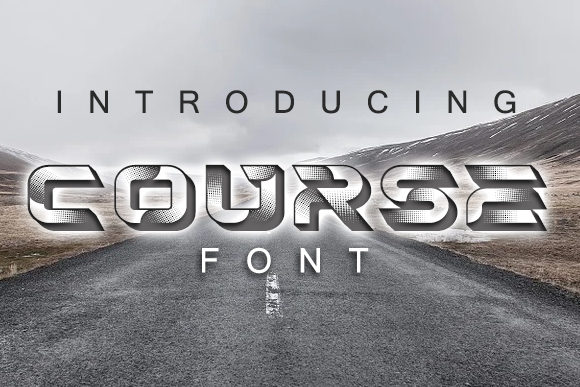
Course: A Bold and Stylish 3D Display Font for Creative Projects
Course is a bold and stylish 3D display font that adds visual impact to any design. It is designed to grab attention with its three-dimensional appearance, making it ideal for headlines, logos, and other prominent text elements. As a display font, Course is not meant for long blocks of text but rather for short, impactful phrases that need to stand out.
When considering fonts for creative projects, the choice of typography can significantly influence the overall aesthetic and effectiveness of the design. Course offers a unique combination of boldness and style that sets it apart from more traditional typefaces. Its 3D effect gives it a modern and dynamic feel, which can be particularly appealing in digital media, branding, and advertising.
Why You Might Be Interested in Course
If you're looking for a font that makes a strong visual statement, Course could be an excellent choice. Its 3D characteristics make it well-suited for designs that require a sense of depth and movement. This font is especially useful in contexts where the text needs to be the focal point, such as in presentations, posters, or website headers.
Designers who want to add a touch of innovation and flair to their work may find Course to be a valuable addition to their toolkit. Its distinctive look can help create a memorable brand identity or enhance the visual appeal of a project without overwhelming the viewer.
Benefits of Using Course
- Visual Impact: The 3D effect of Course ensures that text stands out, making it ideal for catching the viewer's attention quickly.
- Versatility: While primarily a display font, Course can be used creatively in various design contexts, including digital and print media.
- Modern Aesthetic: The bold and stylish design of Course aligns with contemporary design trends, offering a fresh and innovative look.
These benefits make Course a compelling option for designers seeking to elevate the visual quality of their projects. However, it's important to consider how this font will integrate with the rest of the design elements and whether it aligns with the intended message or brand identity.
Tradeoffs and Considerations
While Course offers many advantages, there are also some tradeoffs to consider. As a display font, it is not suitable for extended reading, which limits its use in body text. Additionally, the 3D effect may not render consistently across all platforms or devices, potentially affecting the user experience.
Another consideration is legibility. While the bold style of Course can be striking, it may be difficult to read at smaller sizes or in low-contrast environments. Designers should test the font in different contexts to ensure it remains readable and effective.
Finally, the use of Course may not be appropriate for all types of projects. For example, in formal or academic settings, a more traditional font might be preferable. It's essential to evaluate the context and audience before deciding to use Course.
Situations Where Course Is a Strong Fit
Course is best suited for situations where visual impact and boldness are key. This includes:
- Headlines and Titles: Course can be used to create eye-catching headlines that draw attention to important content.
- Logos and Branding: The unique 3D style of Course can help establish a distinct brand identity.
- Digital Media: In web design, Course can be used for buttons, banners, or other interactive elements that require visual emphasis.
- Advertising and Marketing Materials: Course's bold appearance makes it well-suited for promotional materials that aim to capture attention quickly.
In these scenarios, the use of Course can enhance the overall design and help convey a strong message effectively.
Situations Where Alternatives May Be Worth Considering
While Course is a powerful tool, there are instances where alternative fonts may be more appropriate. For example, if the design requires a clean and minimalistic look, a sans-serif font like Helvetica or Arial might be a better choice. Similarly, for projects that involve a lot of body text, a more readable serif or sans-serif font would be more practical.
Additionally, if the target audience is older or prefers a more traditional aesthetic, using Course may not be the best decision. In such cases, opting for a font that is easier to read and more familiar to the audience could be more effective.
It's also worth noting that the use of Course may not be compatible with certain design software or platforms. Designers should check the font's compatibility and licensing terms before incorporating it into their projects.
Practical Decision-Making Insights
When evaluating whether Course is the right font for a project, it's important to consider several factors. First, determine the purpose of the text and whether a bold, attention-grabbing font is necessary. Next, assess the context in which the font will be used, including the platform, audience, and design elements.
Testing the font in different scenarios can provide valuable insights into how it performs visually and functionally. It's also helpful to compare Course with other similar fonts to see which one best meets the project's needs.
Ultimately, the decision to use Course should be based on a careful evaluation of its benefits and limitations. By understanding how the font fits within the broader design strategy, designers can make informed choices that enhance the overall effectiveness of their work.